Figure humanoid robots: What the HQ video shows
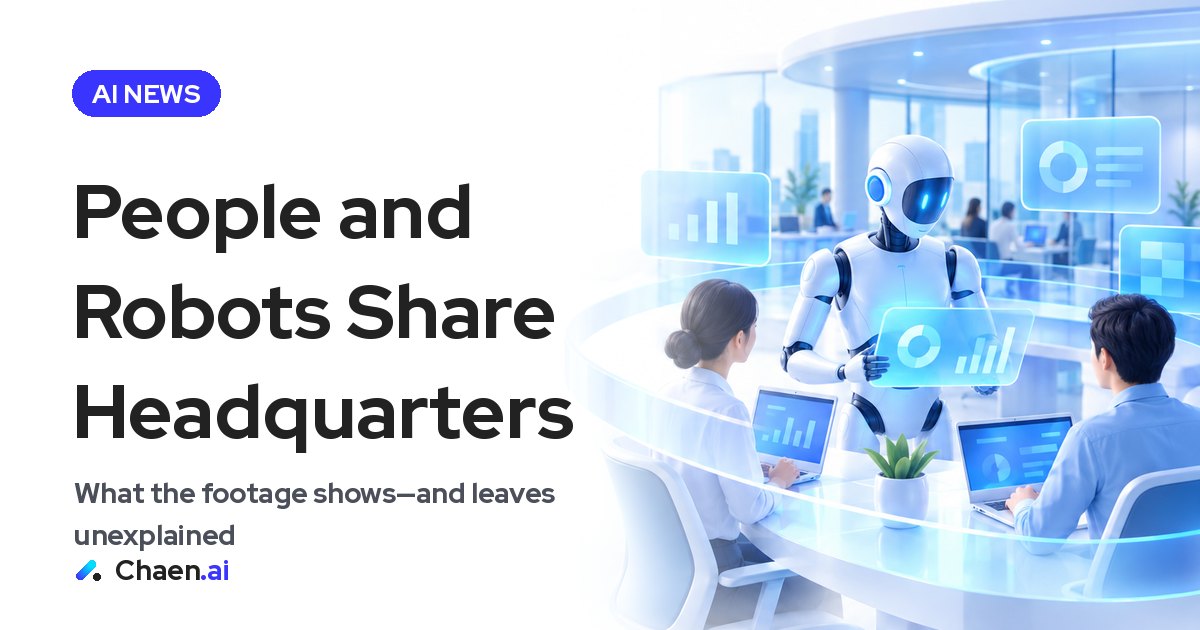
Figure humanoid robots share headquarters space with employees. I examine what the video shows and what Japanese businesses should verify.
Figure humanoid robots appear alongside employees in a headquarters video that makes human–robot coexistence easy to imagine. The footage does not, however, establish whether their movements are autonomous or explain the conditions under which they operate. I want to separate that compelling picture from the evidence a business would need before considering deployment, particularly when presenting the story to companies in Japan.
What Figure’s headquarters video actually shows
Figure CEO Brett Adcock shared a vertical video that tours the headquarters in roughly one and a half minutes. Robots appear around the entrance, lobby, café, and courtyard. Humanoids walk along the same corridors as employees, and people appear to pass them without paying particular attention.
What stood out to me was less an individual movement than the relationship between the robots and their surroundings. Robots lined up in a lobby, with people passing nearby, look like part of the setting rather than an isolated spectacle. The scene reminded me of science fiction, but the material available here is a short view of Figure’s headquarters—not a comprehensive account of its operations.
Adcock also expressed a vision in which scenes like this eventually become widespread around the world. I read that as a statement of the future he wants to convey, not as a deployment timetable.
That distinction preserves what is interesting about the post. It gives viewers a concrete image of people and robots sharing space. We can appreciate that image without treating it as proof of every technical capability needed to make the same scene work elsewhere.
What the humanoid footage leaves unexplained
Figure is a US startup developing general-purpose humanoids for factories and homes. Those intended settings are useful company context, but headquarters footage does not establish what the robots can do in either setting.
I would separate the available information into three groups:
- Visible in the footage: robots occupy several areas of the headquarters, and humanoids move through corridors also used by employees.
- Not explained in the post: whether the walking is autonomous or remotely controlled, and whether positioned robots are there for display.
- Not established by the scene alone: the operating conditions or safety verification behind people sharing that space.
The important mistake to avoid is converting “this looks natural” into “this is autonomous.” An employee walking past a robot tells us something about the scene shown. It does not tell us who or what is directing the robot.
The reverse assumption would also go too far. Missing information does not prove remote operation or a display-only arrangement. I would leave those questions open rather than fill the gaps in either direction.
This is not a reason to dismiss the video. It is a way to describe its value accurately: it communicates a picture of coexistence while leaving the mechanics of that coexistence unexplained.
Figure’s valuation is context, not deployment evidence
Figure raised funding at a valuation of $39 billion in September 2025. That belongs in the company background, but it should not substitute for evidence about a robot’s performance or suitability for a particular workplace.
When funding information appears next to an impressive video, it is tempting to combine them into a single conclusion about readiness. I would keep them separate. The valuation concerns a financing event. The footage concerns scenes presented from the headquarters. Neither directly answers whether a robot can perform the work a prospective customer has in mind.
For an internal briefing, I would use separate sections for company background, visible behavior, and unresolved deployment questions. A scene of a robot walking should remain a scene of a robot walking; the description should not quietly expand into claims about tasks that were not shown.
There is also a useful distinction between exploring a future possibility and evaluating an operational use case. This video can help start the first conversation. The second requires matching the work a company wants done with behavior and conditions it can actually verify. The post is a starting point for that process, not its conclusion.
How I would explain this to businesses in Japan
For people responsible for AI adoption in Japanese companies, I would frame the distinction as “sharing a space” versus “working together in our operation.” The first is the future image conveyed by the footage. The second is a decision involving the company’s own tasks and operating conditions.
This is not a claim that all Japanese businesses will respond alike. It is the framing I would use when translating an overseas robotics story into a useful discussion for a Japanese business audience.
Before debating whether the robots are ready, I would ask the team to define what it wants to learn:
- Are we interested in movement through a shared corridor, or in a particular task?
- Why does sharing space with people matter for that task?
- Which parts of our requirement are visible in the video, and which remain unaddressed?
- What explanation of the operating method would we need before taking the next step?
For overseas AI and technology companies communicating in Japan, I would also recommend identifying the purpose of the footage. Is it presenting a future vision, demonstrating a particular action, or documenting an operating arrangement? Stating that purpose helps viewers understand what claim is being made.
If autonomy is not explained, the accompanying language should leave it unexplained rather than imply it. In this case, describing a vision of humans and robots occupying the same environment retains the appeal of the post without adding unsupported capabilities.
The goal is not to make an engaging story less engaging. It is to give the business audience a clear route from interest to the questions that matter for its own decisions.
What I want to verify during a visit
I intend to visit and examine the situation firsthand. This article is not a report from that visit; it is an assessment of the published post. If I see the headquarters in person, I want to investigate the conditions behind the scene rather than simply reproduce the impression created by the video.
My first question would concern control. Are the walking robots moving autonomously, or is a person operating them? If people are involved, which parts of the activity do they handle? The useful answer would distinguish the robot’s role from the human contribution rather than compress both into a broad label.
My next question would concern placement. Are robots in the entrance and lobby there for display, or are they in some other operating state? Presence alone does not reveal purpose. Without that explanation, I would not infer a business function from where a robot happens to stand.
I would also ask about the conditions under which people and robots share the corridors. Seeing a successful pass-by is different from understanding the arrangements behind it. I would want the explanation to address that distinction.
In recording a visit, I would keep direct observations separate from statements provided by the company. That would help me avoid writing as though one observed scene explained the entire operation. Any conclusions should remain tied to what I actually saw or what was specifically explained.
How to use this discussion in your own company
I would use the video to align questions, not to settle a purchase or deployment decision. Start by describing the work you would want a robot to perform. Then separate what the footage establishes from the operating conditions that remain unknown, and identify the explanations needed to move forward.
For me, the useful takeaway is a tangible picture of people and robots sharing an environment. Keeping enthusiasm for that picture separate from operational verification makes it easier to decide what should be examined next.
FAQ
What does Figure’s headquarters video show?
The roughly one-and-a-half-minute vertical video shows robots around the entrance, lobby, café, and courtyard. Humanoids share corridors with employees, who appear to pass them without paying particular attention.
Are the Figure robots walking autonomously in the video?
The post does not explain whether the walking is autonomous or remotely controlled. It also does not clarify whether robots positioned around the building are there for display, so the footage alone cannot establish their operating arrangements.
What kind of company is Figure?
Figure is a US startup developing general-purpose humanoids for factories and homes. It raised funding at a valuation of $39 billion in September 2025.
Based on a post on XOriginal post ↗
About the author

CEO of DigiRise Inc. Has supported 600+ companies and 50,000+ people with AI training, consulting and development. GMO AI & Crypto advisor, Google Gemini AI advisor. 200K+ followers on X.
Related articles
 Muse Chrome Extension: What It Does vs Claude in Chrome Nov 22, 2026
 Muse Email Address: How It Works and Business Caveats | Meta Nov 22, 2026
 GPT-Live-1.1 API: What Changed for Voice Agents Nov 21, 2026
 Gemini 4 Neon: How to Read Performance and Price Nov 21, 2026
 Grok 5 vs Opus 5.5: How to Read Musk's 2-3 Month Claim Nov 15, 2026
 AI News Roundup: Claude Meetings and NVIDIA's CEO Exit Nov 15, 2026